January 2026

Monthly Top 10 Real Estate Articles for Sydney #90

This month, Australia’s property market discourse has been shaped by a mix of persistent affordability pressures, strong price growth forecasts, shifting buyer behaviour and renewed concern around interest rates. Across Sydney and beyond, structural undersupply remains the dominant theme, influencing both purchase and rental markets. At the same time, government incentives, emotional decision-making, lifestyle-driven migration and infrastructure improvements continue to reshape where demand is concentrated and how much buyers and tenants are willing to pay.

Four overlooked NSW beach towns offering relative affordability

https://www.domain.com.au/news/four-overlooked-nsw-beach-towns-that-wont-break-the-bank-1471999/   

This article highlights four lesser-known NSW coastal towns that may appeal to Sydneysiders seeking a sea change without the price tags of more tightly held beachside markets. South West Rocks, Urunga, Culburra Beach and Tuross Head are presented as offering a combination of lifestyle appeal, improving accessibility and comparatively modest median house prices, generally sitting below or around the $1 million mark. Local agents report growing interest from younger buyers, first home buyers, investors and semi-retirees, with improved regional infrastructure and flexible work arrangements making longer-distance moves more viable. While each town has its own character, common themes include relaxed coastal village lifestyles, manageable crowds, adequate local amenities and increasing buyer enquiry, suggesting these markets may be gradually emerging from under the radar rather than experiencing speculative surges.
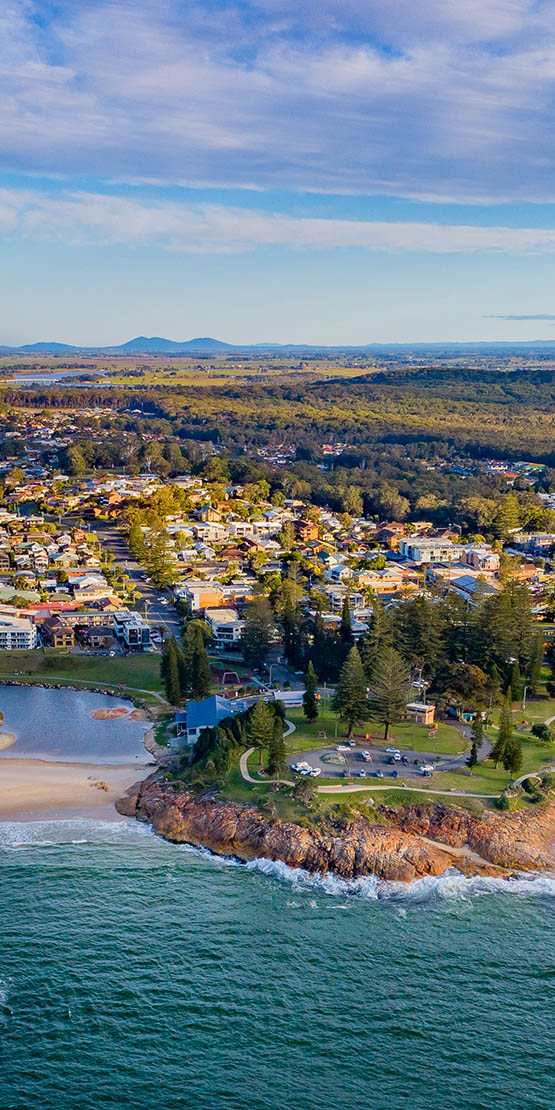

South West Rocks

Virtual styling; yay or nay?

Underrated beach suburbs gaining attention as affordability tightens

https://www.domain.com.au/news/australias-most-underrated-beach-suburbs-in-2026-1468868/

This article examines a range of lesser-known beachside suburbs across Queensland and New South Wales that are emerging as alternatives to tightly held, high-priced coastal markets. Buyers’ agent Steve Palise argues that while blue-chip beach suburbs have surged beyond the reach of many, adjacent or nearby locations still offer strong lifestyle appeal, relative affordability and solid long-term fundamentals. Examples include Coolum Beach and Bokarina on the Sunshine Coast, Palm Beach and Labrador on the Gold Coast, and Umina Beach, Bateau Bay, Lake Conjola, Vincentia and Pottsville in NSW. Common themes include constrained supply, rising owner-occupier demand, improving infrastructure and spillover effects from more famous neighbouring suburbs. While price growth has already been strong in several of these areas, they are positioned as markets where buyers may still secure coastal living without paying peak prestige premiums, particularly families and lifestyle-driven owner-occupiers.

Virtual styling grows in popularity, but authenticity concerns remain

https://www.domain.com.au/news/property-sellers-found-a-way-to-save-money-and-time-but-theres-a-cost-1471609/

This article explores the growing use of virtual styling in Australian property listings, highlighting its appeal as a fast, low-cost alternative to traditional physical staging, particularly for entry-level homes and apartments. Advances in AI have made virtual staging quicker and cheaper, but industry experts caution that poorly executed images can mislead buyers, undermine trust and even risk breaching advertising laws. Buyers’ agents and industry bodies note that unrealistic proportions, incorrect lighting and generic styling can leave prospective buyers disappointed when inspecting properties in person. While AI-driven solutions are criticised for lacking nuance, human-led virtual styling services are positioned as a more credible middle ground, especially for apartments and properties targeting interstate or overseas audiences. Ultimately, the article argues that transparency, accurate representation and realistic expectations are critical, and that virtual styling cannot compensate for fundamental property flaws.

Sydney’s highest-spending suburbs dominated by prestige and scale

https://www.domain.com.au/news/the-sydney-suburbs-where-home-buyers-splashed-the-most-cash-last-year-1471950/

This article analyses Cotality’s Best of the Best 2025 report, which ranks Sydney suburbs by total value of house sales, highlighting how prestige, scale and turnover combined to drive spending. Mosman topped the list with $1.58 billion in house sales across 229 transactions, reflecting its large housing stock, high median values and tightly held nature. Other harbour and eastern suburbs such as Vaucluse, Bellevue Hill and Paddington also featured prominently, driven by limited supply, waterfront appeal and strong demand from high-net-worth buyers. Notably, Castle Hill stood out as a family-oriented outlier, recording a high volume of sales and over $1 billion in total value due to its size, transport improvements and relative affordability compared to blue-chip suburbs. Industry commentators suggest that while prestige markets remain resilient, infrastructure, lifestyle and community appeal continue to underpin strong activity in select middle-ring family suburbs.

How emotional decision-making can push buyers beyond market value

https://www.domain.com.au/news/can-the-emotional-value-of-property-be-measured-1467929/

This article explores the concept of an “emotional premium” in property purchases, examining how buyers—particularly owner-occupiers—often pay above fair market value due to personal attachment rather than financial logic. Buyers’ agents suggest this emotional margin can range from 5 to 10 per cent, driven by factors such as school zones, layout suitability, lifestyle appeal and auction-day pressure. While investors typically rely on comparable sales, yield and debt servicing metrics, owner-occupiers are more likely to prioritise how a property feels, especially in competitive auction environments where fear of missing out can escalate bids. Experts argue that paying a modest emotional premium is not necessarily irrational if buyers are informed and financially comfortable, but caution that bank valuations ultimately impose discipline by limiting borrowing against unsupported prices. The article concludes that the key is conscious decision-making—balancing emotional satisfaction with a clear understanding of fair market value and financial risk.

Sydney house prices tipped to surge towards $2 million median in 2026

https://www.domain.com.au/news/shock-house-price-predictions-for-2026-sydney-median-tips-2-million-1458005/

This article outlines Domain’s latest Forecast Report, which predicts strong price growth across Australia’s capital cities through 2026, with Sydney house prices forecast to rise by 10 per cent over the 2025–26 financial year and push the median close to $2 million. The report attributes early momentum to multiple cash-rate cuts, ongoing supply shortages and demand-side support such as the expanded First Home Guarantee scheme, before affordability constraints temper growth in the second half of the year. Sydney is expected to lead all capitals in absolute price gains, while Brisbane continues to outperform on growth rates, particularly for units. Rents are also forecast to keep rising nationwide, offering little relief for tenants. Economists and industry leaders broadly agree with the outlook, warning that government incentives are amplifying demand in an already undersupplied market, and that structural supply issues remain the dominant force driving prices higher.

Rental affordability pressures intensify as outer and inner suburbs record sharp rises

https://www.domain.com.au/news/the-sydney-suburbs-where-rents-soared-most-over-2025-1473928/

This article examines Domain’s latest Rent Report, which shows Sydney rents reaching record highs in 2025, with significant annual increases across both inner-city and outer-ring suburbs. House rents rose most sharply in Pyrmont, up nearly 30 per cent, while unit rents surged in areas such as Curl Curl, West Gosford and Barangaroo, reflecting shifting tenant demand as detached homes become increasingly unaffordable. The data points to an “affordability flight”, with renters pushed towards the Central Coast and other relatively cheaper suburbs still within commuting distance of Sydney. Despite a slight lift in vacancy rates late in the year, the rental market remains extremely tight, underpinned by chronic housing undersupply. Economists note that while rent growth has moderated compared to the peaks of 2022–2024, high costs and intense competition continue to place substantial financial pressure on tenants, particularly younger renters and lower-income households.

First-home buyer affordability diverges sharply under the 5% deposit scheme

https://www.domain.com.au/news/australias-most-out-of-reach-property-market-for-first-home-buyers-and-its-not-sydney-1476736/

This article examines how the expanded 5% Deposit Scheme is producing uneven outcomes for first-home buyers across Australia, with Queensland—particularly the Gold Coast—emerging as the most out-of-reach market despite the policy’s intent. While Melbourne and Sydney still offer relatively broad access to sub-cap homes due to stronger supply pipelines and higher price caps, Queensland buyers face a shrinking pool of eligible properties as demand accelerates faster than new stock. Economists and buyer advocates argue the scheme has stimulated demand without addressing structural supply shortages, contributing to rapid price inflation in already constrained markets. Although the policy has helped many buyers enter sooner, critics warn it is exacerbating affordability pressures, encouraging rushed decisions and exposing low-equity buyers to greater long-term risk unless accompanied by meaningful housing supply reform.

Property price growth expected to persist in 2026 despite affordability pressures

https://www.domain.com.au/news/how-far-property-prices-will-rise-in-2026-1476897/

This article outlines forecasts from KPMG and other economists suggesting Australian property prices will continue rising through 2026, driven by strong demand, ongoing housing undersupply and expanded first-home buyer assistance. KPMG predicts Sydney house prices will rise 5.8 per cent and Melbourne 6.8 per cent, with units posting similar gains, while smaller capitals such as Perth and Brisbane are expected to see even stronger growth due to affordability-driven demand. Economists argue that first-home buyer incentives are already pushing up prices at the lower end of the market, particularly in Sydney and Melbourne, without addressing the core issue of inadequate housing supply. While interest rate uncertainty may act as a moderating force, most forecasters agree that any rate rises would slow, rather than reverse, price growth. Overall, affordability constraints are expected to increasingly shape buyer behaviour, with greater demand for units and lower-priced housing segments as 2026 progresses.

Inflation surge raises likelihood of RBA rate hikes in early 2026

https://www.realestate.com.au/news/inflation-jump-locks-in-rba-to-start-rate-hikes-from-next-week/

This article reports that a sharper-than-expected rise in inflation has significantly increased expectations that the Reserve Bank of Australia will begin lifting interest rates as early as its February 2026 meeting. Headline CPI rose to 3.8 per cent in the year to December, exceeding forecasts and moving further outside the RBA’s 2–3 per cent target band, while trimmed mean inflation also edged higher to 3.3 per cent. The increase was driven largely by housing-related costs, particularly electricity, rents and new dwelling construction, with the expiry of government rebates playing a notable role. Economists argue the persistence of elevated underlying inflation leaves the RBA little choice but to act, despite the risk to borrowers. Modelling suggests even a modest 0.25 percentage point rate hike would add meaningful monthly costs for mortgage holders, underscoring the growing financial pressure on households as inflation, housing costs and interest rate risks converge.

Conclusion

Together, these articles point to a property market entering 2026 with strong momentum but growing fragility. While prices and rents continue to rise, affordability constraints, supply shortages and interest rate risks are increasingly shaping outcomes. The balance between lifestyle demand, policy intervention and economic reality will be critical in determining how sustainable current trends prove to be over the year ahead.