June 2026

Monthly Top 10 Real Estate Articles for Sydney #95

This month, the Sydney property market appears to be moving through a more cautious and complex phase, shaped by interest rate uncertainty, proposed tax reform, weaker auction conditions, supply pressures and shifting buyer behaviour. Several articles point to a market where confidence has softened but demand has not disappeared, with serious buyers becoming more selective and vendors increasingly cautious about testing the market. At the same time, new housing approvals, medium-density debate, regional migration, compliance changes and lifestyle-led suburb transformation show that the market is being influenced by more than price movements alone. The common thread is a property environment where policy, affordability, supply and buyer confidence are all working together to reshape decisions across Sydney and beyond.

RBA rate pause offers temporary relief, but property market uncertainty remains

https://www.domain.com.au/news/rba-interest-rate-decision-june-16-2026-australia-cash-rate-announcement-1524752/

The Reserve Bank of Australia’s decision to hold the cash rate at 4.35 per cent has provided some short-term relief for mortgage holders after three consecutive rate rises earlier in the year, but the outlook remains uncertain. While RBA governor Michele Bullock confirmed the board did not consider another rise at this meeting, she also made clear that further increases remain possible if inflation does not continue moving towards the target range. Property and finance experts suggested the pause may help reduce some immediate uncertainty for buyers, vendors and households, particularly as inspection numbers, auction clearance rates and listings have softened. However, inflation remains above target, mortgage stress is rising and major bank forecasts remain divided, with Westpac expecting further hikes while ANZ, CBA and NAB believe rates may have peaked before possible cuts in 2027. For the Sydney property market, the article points to weaker buyer confidence, cautious vendors and slower price growth, with PRD noting Sydney’s growth had eased to 2.53 per cent, well below stronger market conditions. Overall, the rate hold is positioned as a welcome but fragile reprieve rather than a turning point, with the August RBA meeting and upcoming inflation data likely to shape the next phase of market sentiment.

A spot of fishing in Rozelle Bay

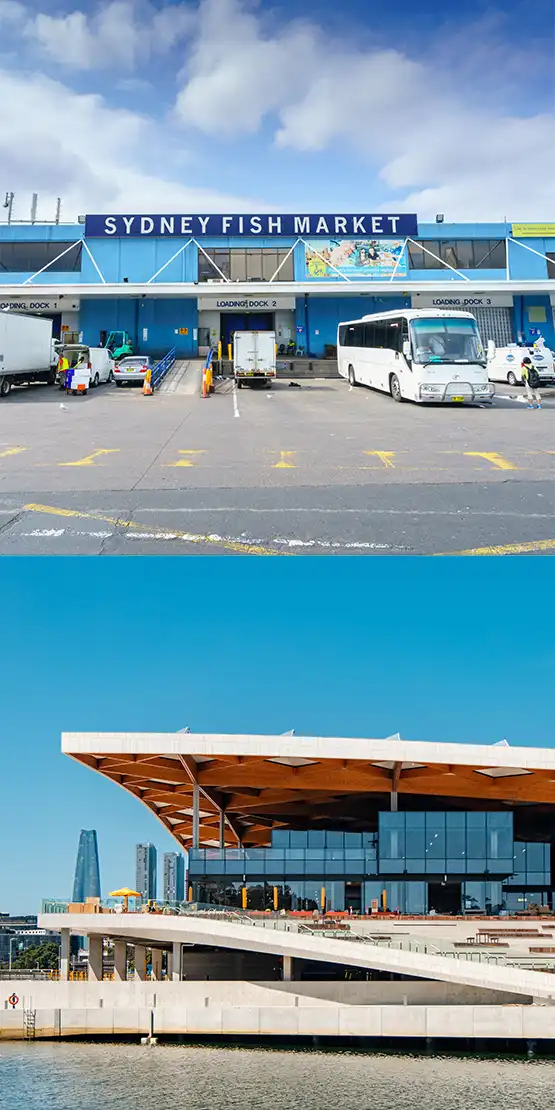
The old (top), and new Sydney Fish Markets

Interest rates and proposed tax changes reshape residential market sentiment

https://therealestateconversation.com.au/news/2026/06/17/demand-new-houses-increases-following-proposed-tax-changes-cbre/1781666717

CBRE’s Residential Valuer Insights Q2 2026 survey suggests residential market sentiment has softened, with interest rates expected to remain the strongest driver of market performance over the next 12 months. The survey found 44 per cent of CBRE residential valuers believe interest rates will be the biggest influence on the market, while 28 per cent pointed to proposed Capital Gains Tax and negative gearing changes, and 17 per cent identified affordability as a major factor. Demand for new houses increased to 44 per cent in Q2, up from 34 per cent in the previous quarter, suggesting some buyer interest may be shifting towards new stock in response to the proposed tax changes. However, broader demand has moderated, with just under a third of valuers reporting strong or very strong demand, down from 54 per cent last quarter. Price growth expectations have also pulled back sharply, particularly for houses, with only 29 per cent of valuers expecting growth compared with 70 per cent in Q1 2026. CBRE’s Sameer Chopra noted that the proposed CGT and negative gearing changes are already influencing how prices, development and rents are being assessed, while Kat Hale observed that demand remains active among first home buyers and upgraders but is easing overall. For Sydney, the softer conditions in Sydney Outer Metro point to a more cautious market, with rental pressure and investor uncertainty likely to remain key themes.

Buyers become more selective as property market conditions adjust

https://therealestateconversation.com.au/news/2026/06/17/the-property-market-holding-its-breath-ray-white/1781657958

Ray White’s analysis suggests the housing market is not collapsing, but instead moving through a more rational adjustment as buyers respond to higher interest rates, proposed Federal Budget property tax changes and broader uncertainty around Capital Gains Tax and negative gearing. The article argues that the post-COVID urgency has eased, with fewer crowds at open homes and fewer registered bidders than the same time last year, but this does not necessarily indicate a weak or inactive market. Instead, Ray White observes that buyers are becoming more discerning, serious and deliberate, particularly as first home buyers experience less competition from investors at some auctions. While investor sentiment has been affected by the proposed tax changes, underlying supply pressures remain, and reduced investor activity could place further strain on rental markets in established areas. Importantly, the article notes that well-priced and transparently presented properties are still attracting strong competition, showing that demand has not disappeared. For Sydney and other major markets, the key message is that buyer behaviour has shifted from urgency to caution, but fundamentals such as population growth, limited housing supply and the desire for home ownership continue to support market activity.

New housing approvals highlight Sydney’s supply challenge and shifting demand

https://www.realestate.com.au/news/the-suburbs-bracing-for-a-wave-of-new-homes/

New Australian Bureau of Statistics data shows that major outer-suburban growth corridors and selected inner and middle-ring areas are preparing for a significant wave of new housing, with more than 180,000 homes approved nationally so far this financial year. While Melbourne’s outer suburbs dominated the list for new house approvals, Sydney also featured strongly, with Five Dock-Abbotsford recording more than 1,200 new unit approvals, Ermington-Rydalmere receiving approval for more than 900 homes, Austral-Greendale seeing more than 900 dwellings approved, and Box Hill-Nelson adding more than 700. The article highlights the different forms of supply emerging across Sydney, from apartments in established inner and middle-ring suburbs to house and land packages in outer growth areas. However, REA Group senior economist Anne Flaherty warned that Australia is still building fewer homes than needed to keep pace with population growth, with signs pointing to a continued deterioration in housing supply relative to population. Proposed federal property tax changes, including limiting negative gearing to newly built homes from July next year, may also shift investor demand towards new dwellings, potentially increasing competition with first home buyers in growth areas. For Sydney, the data reinforces the importance of both infill apartment development and outer-suburban land release, while also pointing to ongoing pressure on affordability, supply and buyer competition.

New AML/CTF laws bring major compliance changes for real estate agencies

https://agent.domain.com.au/news/real-estate-aml-ctf-compliance-laws-1527427/

Australia’s real estate industry is preparing for a significant compliance shift as new anti-money laundering and counter-terrorism financing laws bring real estate professionals into the AML/CTF regime from 1 July. The reforms will require agencies involved in buying and selling residential, commercial, industrial and agricultural property to complete customer due diligence on vendors and purchasers, including identity verification, beneficial ownership checks, risk assessments, sanctions screening and ongoing monitoring where client risk changes. Agencies will also need to enrol with AUSTRAC, establish a compliance program, appoint a compliance officer, train staff, keep transaction records for seven years and report suspicious matters. Real Estate Institute of Australia president Jacob Caine said agents will need to recognise red flags during sales campaigns, such as unusually large cash deposits or vendors accepting prices well below market value. While the changes do not apply to property management or commercial leasing, they represent a major operational change for sales agencies. Ray White’s Thomas McGlynn described the reforms as one of the biggest nationwide regulatory shifts the industry has faced in years and encouraged agencies to approach the transition in phases, communicate clearly with clients and use stronger compliance processes as a way to demonstrate professionalism. For Sydney’s property market, the reforms may add another layer of process and responsibility to transactions, particularly in higher-value segments where identity, source-of-funds and risk checks are likely to become more visible.

Auction clearance rates weaken as vendors pull back from testing the market

https://therealestateconversation.com.au/news/2026/06/22/combined-capitals-preliminary-clearance-rate-falls-474-cotality/1782093324

Cotality economist Annabelle Mezieres reported a notable weakening in auction market conditions, with the combined capital city preliminary clearance rate falling to 47.4 per cent, its lowest reading since the final week of April 2020. The result marked the first time the preliminary clearance rate had fallen below 50 per cent since the early pandemic period, with clearance rates now sitting below 60 per cent in ten of the past 12 weeks. The data also showed that 23.6 per cent of scheduled auctions were withdrawn, while almost half of successful sales occurred prior to auction, suggesting some vendors may be reluctant to test buyer demand under public auction conditions. Sydney’s auction market was particularly soft, with auction volumes falling to 645, down 17.5 per cent on the previous week and 17.1 per cent lower than the same time last year. Sydney’s preliminary clearance rate dropped to 47.4 per cent, down from 52.8 per cent, making it the city’s weakest early result since the week ending 19 April 2020. With auction volumes expected to ease further in coming weeks, the article points to a market where weaker selling conditions, lower buyer urgency and vendor caution are becoming more evident, particularly in Sydney and Melbourne.

Regional migration strengthens as affordability pressures reshape buyer choices

https://www.realestate.com.au/news/regional-areas-no-longer-a-second-choice-as-aussies-shun-capital-cities-in-record-numbers/

The latest Regional Movers Index shows Australians are continuing to leave capital cities for regional areas in record numbers, with capital-to-regional migration between January and March 2026 sitting 29.7 per cent higher than moves in the opposite direction. The trend reflects a growing preference for lifestyle, space and relative affordability, with the median capital city home reaching $1,012,000 compared with $723,000 in regional areas. While Sydney and Melbourne remain major contributors to regional outflows, the article notes that migration away from capital cities is becoming more geographically dispersed, with Brisbane, Perth, Adelaide and Canberra also recording increasing movement as housing costs rise. Popular destinations include the Sunshine Coast, Geelong, Moorabool, Lake Macquarie and the Fraser Coast, while areas such as Toowoomba, Broome, Townsville and the Clarence Valley recorded sharp increases in net inflows. Regional Australia Institute chief executive Liz Ritchie described regional Australia as no longer a second choice, but the “smart choice”, reflecting the extent to which affordability and lifestyle are now influencing housing decisions. For Sydney, the continued flow of residents towards regional alternatives highlights the pressure created by high prices and limited affordability, while also reinforcing the appeal of nearby lifestyle markets such as Lake Macquarie for buyers seeking more value outside the capital.

High-rise apartment supply alone may not solve Sydney’s affordability challenge

https://www.smh.com.au/property/news/the-surprising-effect-on-house-prices-of-building-1000-new-apartments-20260622-p60943.html

New research from the e61 Institute suggests Sydney’s housing affordability problem cannot be solved by high-rise apartment supply alone, with suburbs that received large volumes of new apartments still recording strong detached house price growth. The report examined Sydney’s apartment development cycle and found that while new apartments helped limit apartment price growth in areas where large numbers were built, they did not necessarily reduce demand for detached houses. In suburbs where more than 1,000 new apartments were built, the median detached house price rose 91 per cent between 2012 and 2017, compared with 69 per cent in suburbs where fewer than 100 apartments were built. Dr Nick Garvin from the e61 Institute said this suggests different types of housing may serve different buyer markets, meaning growth in one segment may have limited impact on prices in another. The research supports the need for more housing supply overall but argues for a more diverse approach, including townhouses and medium-density apartments that can provide greater housing choice. KPMG’s Terry Rawnsley agreed that medium-density housing could help improve affordability because it can often be delivered more cheaply and by a broader range of builders than high-rise towers. For Sydney, the article reinforces that supply remains essential, but the mix of housing delivered matters just as much as the total number of dwellings.

New Sydney Fish Market adds lifestyle appeal while testing Glebe’s local amenity

https://www.domain.com.au/news/how-the-new-sydney-fish-market-is-reshaping-the-foreshore-and-local-lifestyle-of-glebe-1525289/

The new Sydney Fish Market is reshaping the Glebe and Blackwattle Bay foreshore, adding a major lifestyle drawcard to an already highly regarded inner-city harbour precinct. Local agent James Cahill said the broader Blackwattle Bay improvements are further elevating Glebe’s appeal, with the new market becoming a major point of local interest and reinforcing the suburb’s strengths around walkability, cafes, pubs, parkland, light rail access and proximity to the CBD. The article highlights Glebe’s established lifestyle appeal, including its continuous foreshore parkland around Rozelle and Blackwattle bays, heritage character, village atmosphere and broad demographic mix. However, the market’s popularity has also created practical pressure for nearby residents, particularly around parking, with The Glebe Society acting president Duncan Leys noting that many locals without off-street parking are finding it harder to park near their homes. The article also touches on wider tensions around density and development, with community concerns about proposed high-rise towers on the former fish market site in neighbouring Pyrmont. For Sydney’s property market, the story shows how major infrastructure and lifestyle upgrades can strengthen suburb appeal and buyer interest, while also creating localised pressures around amenity, parking, heritage and future planning.

SMSF borrowing ban narrows residential property investment options

https://therealestateconversation.com.au/news/2026/06/26/what-the-smsf-borrowing-ban-means-property-investors-ray-white/1782426400

Ray White economist Atom Go Tian explains that new federal legislation will prevent self-managed superannuation funds from using borrowed money to purchase residential property, closing a future pathway for tax-advantaged property investment. The change applies 45 days after the bill receives royal assent, with existing SMSF residential property loans protected and commercial property borrowing unaffected. The article explains that SMSF borrowing for residential property has typically occurred through limited recourse borrowing arrangements, where lenders can only claim the specific property used as security if the fund defaults. Concerns about this structure have existed for more than a decade, but the issue has become more pressing following broader Budget changes to negative gearing and capital gains tax, which could otherwise have left SMSFs as an alternative route for leveraged residential property investment. The immediate market impact is expected to be limited, as Australian Taxation Office data shows residential property represents $62.7 billion, or 5.9 per cent, of total SMSF assets, while annual growth in SMSF property borrowing is small compared with national investor lending. For Sydney investors, the change is unlikely to disrupt existing arrangements but may reduce one future funding option for residential investment, particularly in higher-value markets where superannuation-backed borrowing may have been considered as part of a broader wealth strategy.

Caution, reform and housing choice define the June property market

Overall, the June 2026 articles suggest the Sydney property market is not experiencing a simple downturn, but a broader reset in confidence, expectations and decision-making. Interest rates remain the central pressure point, while proposed tax changes, weaker auction results and new compliance obligations are adding further complexity for buyers, sellers, investors and agents. At the same time, housing supply remains a major constraint, with new approvals, apartment delivery and medium-density options all playing different roles in the affordability debate. Lifestyle and location continue to matter, as seen in Glebe’s foreshore transformation and the continued appeal of regional alternatives for households seeking greater value. The market appears more selective and cautious than in recent years, but demand remains supported by population growth, housing undersupply and the enduring desire for secure, well-located property.