September 2026

Monthly Top 10 Real Estate Articles for Sydney #98

This month, Sydney’s property market is being shaped by higher interest rates, softer prices and uncertainty among buyers and investors, while construction costs and delivery constraints continue to limit new housing supply. The ten articles also point to shifting auction conditions, affordability pressures and growing attention to energy efficiency. Together, they show a market where buyers are cautious, sellers are adjusting to changed conditions and the supply of homes remains a central concern.

Auction activity lifts, but sellers’ gains remain modest

https://www.domain.com.au/news/the-stark-reality-facing-sellers-as-auction-results-hit-19-week-high-1556311/

Sydney’s spring auction market is showing stronger buyer activity, with the combined capitals’ preliminary clearance rate reaching 58.5 per cent, its highest level in 19 weeks, as more buyers attend inspections and register to bid. Agents say buyer depth remains solid, although any rise in interest rates could weaken the recovery. The increase in competition has not necessarily brought strong price growth: a Haberfield home bought for $4.6 million in 2021 sold for $4.8 million, leaving its owner short of the estimated $5 million needed to cover purchase costs, improvements and selling expenses. One agent said some properties bought two to three years ago are still difficult to sell at a break-even price, suggesting returns have slipped back towards 2023 levels.

Property prices in some areas such as Haberfield flatlining?

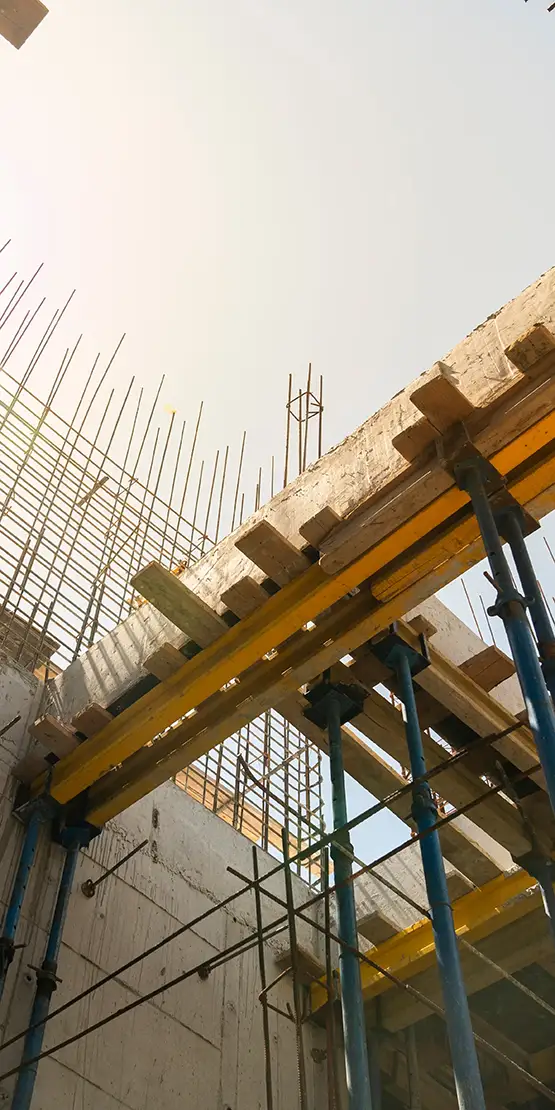
Building costs looking up… not in a good way

Investor sell-offs raise concerns about rental supply

https://www.domain.com.au/news/one-in-five-investors-sell-up-as-tax-changes-trigger-property-market-exodus-1555616/

A Property Investment Professionals of Australia survey found that 18.3 per cent of investors sold at least one property in the year to August, while 62.3 per cent reported negative cash flow. The article links the decisions to the federal government’s planned changes to negative gearing and the capital gains tax discount, alongside rising interest rates, land tax and compliance costs. PIPA chair Cate Bakos warned that sales to owner-occupiers and withdrawals from long-term rental would shrink rental supply and add pressure to rents, particularly in established suburbs. Investor appetite for future purchases has also weakened, with fewer respondents planning to buy again and some considering shares, managed funds or superannuation instead. Although most landlords are currently absorbing much of their higher operating costs, many expect to pass on more compliance costs through rents.

Auctions can give buyers a reason to act

https://www.therealestateconversation.com.au/profiles/2026/09/11/competition-doesnt-just-happen-ray-white/1789091451

Ray White chief auctioneer Luke Banitsiotis argues that buyer demand has not disappeared; sellers and agents need to give buyers a reason to make a decision. He points to Victorian campaign data showing that auctions attract more open-home visitors than private treaty sales and are more likely to secure an offer within 45 days. In his view, the auction deadline creates a timeframe for follow-up, second inspections and buyer decisions, giving competition a chance to build. He stresses that auctions do not suit every property or compensate for weak pricing, presentation or campaign management, but says their structure can help generate urgency in a market where buyers may otherwise keep watching and delay acting.

Builder failures expose barriers to delivering new homes

https://theconversation.com/australia-has-a-housing-shortage-so-why-are-bathla-and-other-home-builders-collapsing-291029

Despite strong housing demand, construction companies are struggling with high costs, tight margins, labour shortages and financial risk. Bathla Group’s administration has left more than 2,000 apartments in limbo and put a further 14,000 homes at risk, while owing about A$3.4 billion to private lenders. The article says construction insolvencies remain high, with 3,472 builders collapsing in the financial year to June 2026. Fixed-price contracts have left builders absorbing unpredictable cost increases, while softer prices, higher interest rates and reduced investor confidence have made some projects unviable. It also points to structural problems—including complex regulation, slow approvals and poor infrastructure coordination—that add delays and costs, particularly for small builders. Without changes, builders may continue shifting towards less risky commercial and infrastructure work, further limiting housing supply.

Sydney leads steep falls in premium property prices

https://www.domain.com.au/news/300k-200k-100k-value-wiped-off-the-biggest-property-price-falls-in-australia-so-far-this-year-1551338

Domain’s June quarter data shows sharp price declines across premium Australian property markets, with Sydney the main centre of the downturn. The largest reported fall was a $353,500 drop in the median price of houses in Sydney’s Eastern Suburbs–North, while units in the same region fell by $100,000. Other significant Sydney declines included houses in Chatswood–Lane Cove, North Sydney–Mosman and Dural–Wisemans Ferry. Analysts and agents attributed the weakness to higher interest rates and reduced investor confidence following the federal Budget’s proposed tax changes, while noting that the premium market often turns before the broader market. Some buyers are beginning to look for value, but commentators expect further falls and a subdued market in the near term.

Buyers and sellers remain far apart on prices

https://www.domain.com.au/news/million-dollar-gap-as-buyers-and-sellers-remain-worlds-apart-1556901

Domain’s September Matching Demand Report shows that buyers’ search budgets often remain well below sellers’ listing prices, even after recent property price falls. The largest gap is in Sydney’s Eastern Suburbs–North, where buyers are searching at a median of $3.5 million compared with listings at $5.25 million; Sydney’s Manly region also has a $1 million gap. Buyers are wary of overpaying and are watching for further falls, while many vendors are reluctant to lower their expectations, contributing to passed-in and withdrawn auctions. Some buyers are considering townhouses and apartments to stay in preferred suburbs. Conditions vary, however: in parts of Sydney, including Ryde–Hunters Hill, Leichhardt and Auburn, buyer search prices are above listing prices, and scarce, high-quality homes can still attract strong competition.

Rate rises could keep thousands of households out of home ownership

https://www.domain.com.au/news/in-one-move-another-30000-are-locked-out-of-the-great-australian-dream-1561064/

University of Sydney modelling suggests each 0.25 percentage point interest rate rise could reduce home purchases by about 5 per cent and effectively lock around 30,000 households out of home ownership for years. The research estimates the home ownership rate could fall by 0.1 percentage points within weeks and 0.3 points over four years, from a current level of about 66 per cent. First-time and lower-income buyers are likely to be hit earliest as borrowing capacity tightens, and some may take up to a decade to save enough to buy again. Even if rates later fall, rising property prices and changed lending requirements could leave them further behind. The article was published ahead of an expected RBA decision to lift the cash rate by 0.25 points to 4.6 per cent.

Energy efficiency gains importance in property decisions

https://www.therealestateconversation.com.au/news/2026/09/23/new-cotality-and-reia-report-links-energy-efficiency/1790116118

A new report from Cotality and the Real Estate Institute of Australia examines state-by-state energy disclosure rules and the growing role of home performance information in buying, selling and renting. The Efficiency Edge highlights case studies in which energy-efficient design was identified as a contributing factor in sale prices up to 66 per cent above local suburb medians and rental returns up to 35 per cent higher. REIA president Jacob Caine says buyers, sellers, landlords and tenants are paying more attention to comfort, running costs and energy performance, while Cotality’s Richard Griffiths argues that accessible performance information can help people compare homes and make more informed decisions. The report also offers practical guidance for agents as disclosure requirements expand.

RBA raises cash rate to a 15-year high

https://www.domain.com.au/news/rba-interest-rates-live-updates-september-2026-decision-1560782

The Reserve Bank lifted the cash rate by 0.25 percentage points to 4.6 per cent, its fourth increase this year, citing inflation that remains above target. The move adds about $100 a month to repayments on a typical $600,000 mortgage, while the article estimates a borrower with an average $736,259 loan will pay around $427 more each month than in January. RBA governor Michele Bullock said further rises remain possible if needed and that rate increases can take 12 to 18 months to fully affect the economy. Higher borrowing costs are adding pressure to housing markets and buyer confidence: Sydney’s median house price was reported at about $1.73 million, down 3.3 per cent in the June quarter, while mortgage demand and first-home buyer applications have also fallen.

High construction costs put pressure on housing supply and prices

https://www.domain.com.au/news/the-hidden-force-keeping-australian-house-prices-high-building-costs-have-soared-51-1558937

Construction costs have risen more than 51 per cent since 2019, with labour shortages, material price increases, higher borrowing costs and competition from infrastructure projects adding further strain. Ray White economist Nerida Conisbee argues that persistently high building costs limit how far house prices can fall: if new projects become unviable, construction slows, supply tightens and demand shifts towards established homes. Industry delivery is also constrained by planning and site-preparation delays, builder failures and a shortage of skilled trades. Equifax data cited in the article shows only 23 per cent of new housing builds were completed on time in the past year, while the share of Australians intending to build within five years has halved to 5 per cent. In Sydney, where housing supply is already under pressure, rising costs may make the shortage harder to address and put a floor under existing property prices.

Conclusion

Sydney’s market is navigating a combination of affordability strain, higher borrowing costs and uneven price performance. Stronger auction activity has yet to guarantee meaningful gains for sellers, while investor exits and construction constraints threaten rental availability and future housing supply. Buyers may find opportunities where expectations have adjusted, but price gaps, interest rate uncertainty and limited new construction remain significant obstacles. The outlook will depend on confidence, borrowing conditions and whether the industry can deliver homes at a scale and cost that meet demand.